
August was a big month for SightReader, so I thought September might be a little quieter. Famous last words!
This month has brought a long list of improvements. People are already enjoying them, and I’m excited to share more about them here.
Lessons
The graded pieces have always been one of the most popular parts of SightReader. They are written specially for each grade, from Initial to Grade 8.
But I knew we could do better. Nothing explained the ideas each piece was introducing. Some pieces were too alike, and others moved through new ideas too quickly. And for complete beginners, even Initial could be a struggle.
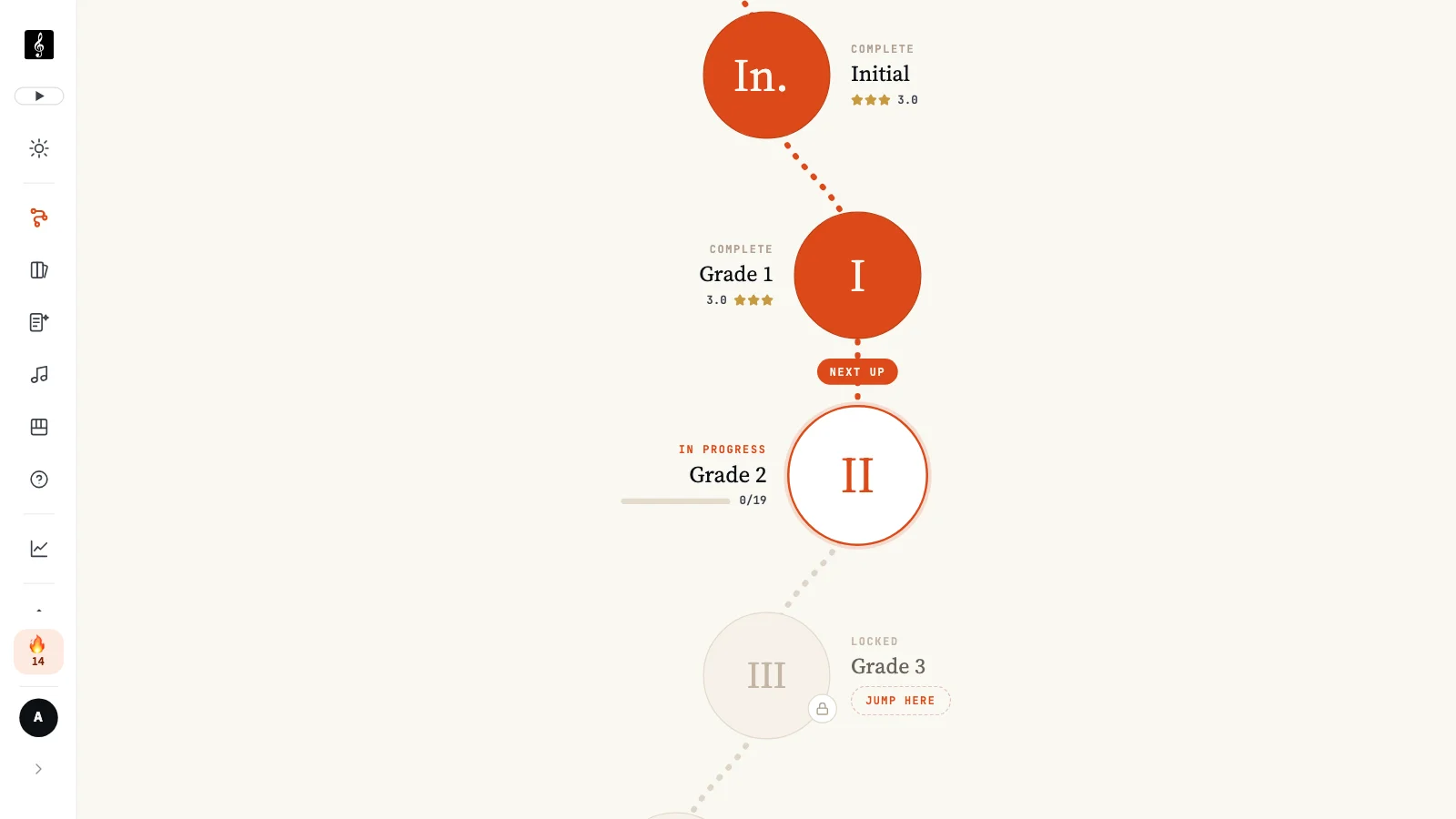
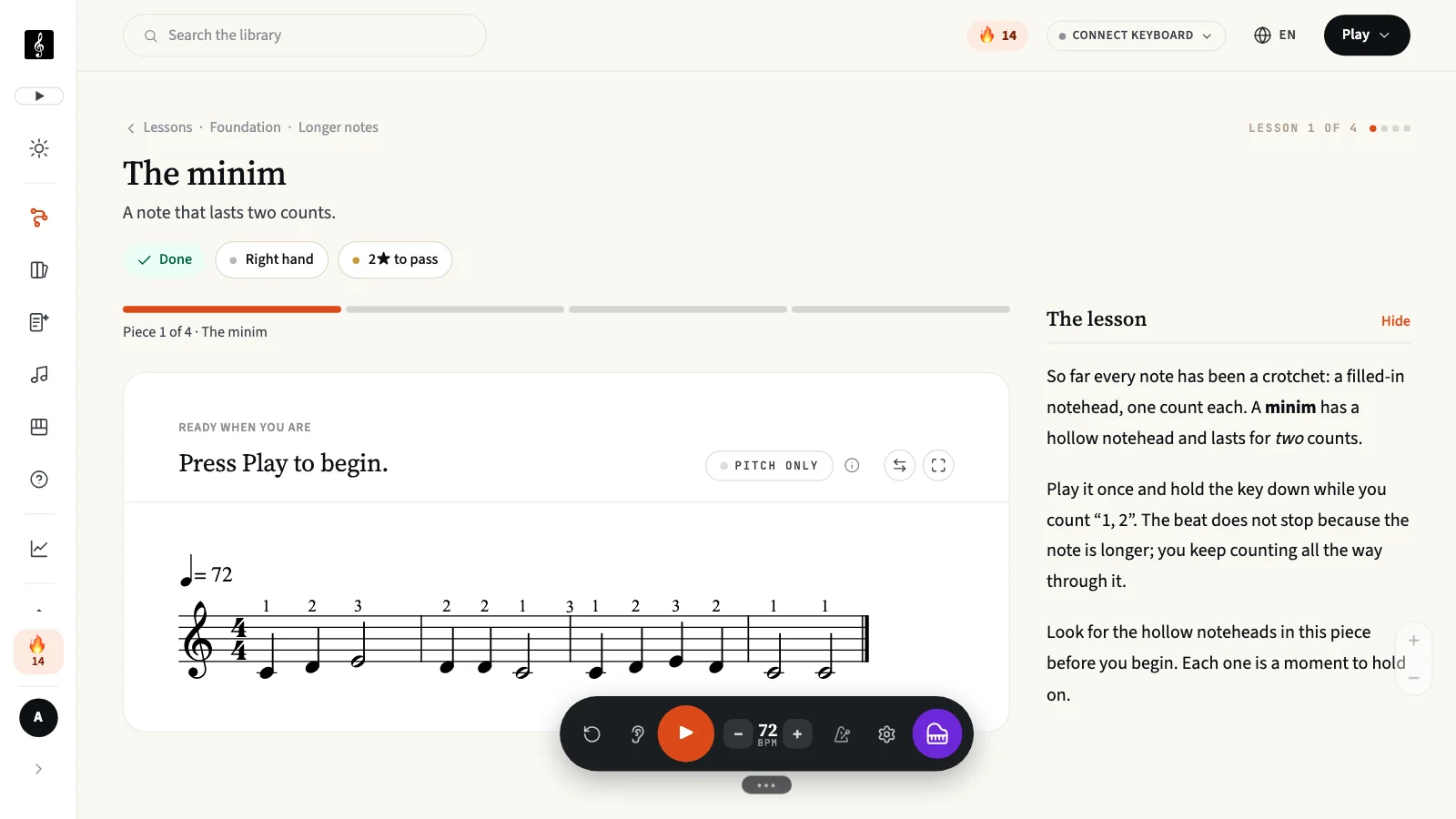
Lessons is a new approach. You follow a path, and each new idea comes with a short explanation and a piece written to use it. You then practise that idea several times before moving on. The pieces have more variety and sound more like real music. For complete beginners, there’s a new Foundation stage before Initial, starting from a single note on the stave. If you already read a little, a checkpoint lets you skip ahead to your level.
Foundation and Initial are free in full, and so is the first unit of Grade 1. Everything in Grades is still there if you want to rehearse for an exam.
Studies
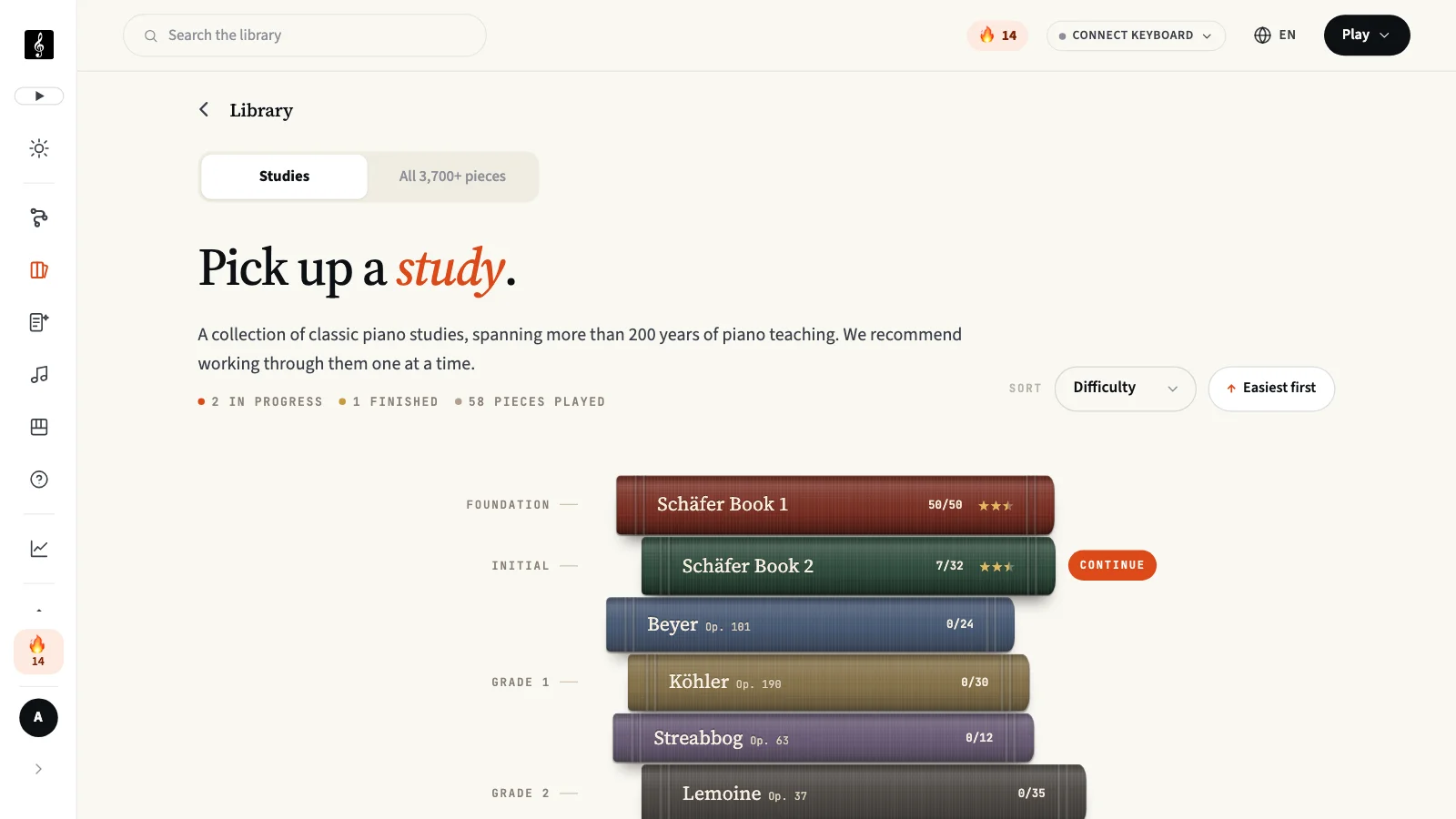
Our library is big. That’s a strength if you want to practise something specific, like an unusual time signature. It’s less helpful if you want someone to choose for you.
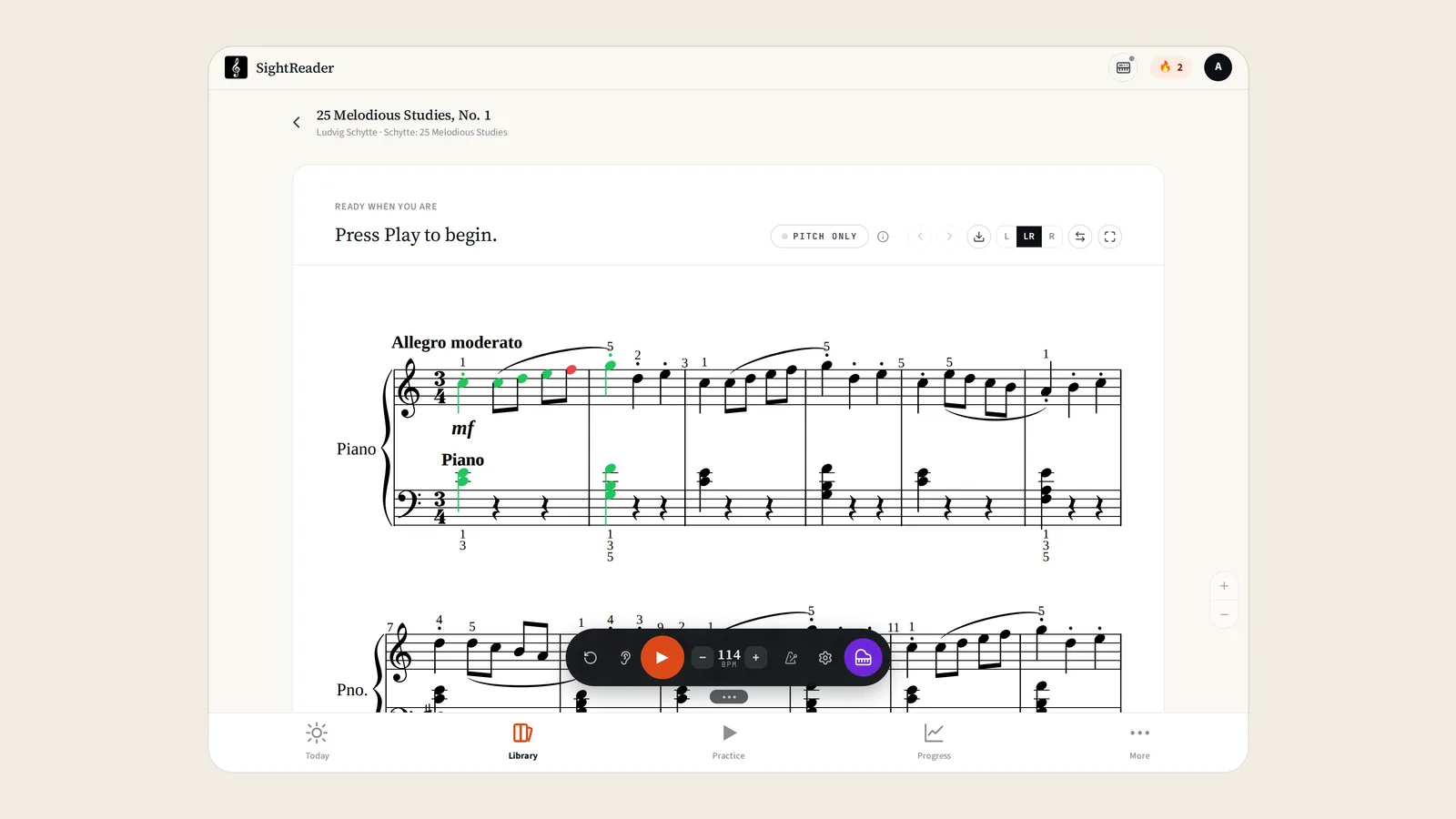
So there’s now a new way to browse the library: Studies. It’s a hand-picked shelf of study books, full of exercises that piano learners have used for over 200 years, arranged from the easiest upwards. The pieces we compose for SightReader are useful, but these studies have stood the test of time. Some are hard to find elsewhere, so I’m proud to have them in one place, with SightReader marking every note as you play.
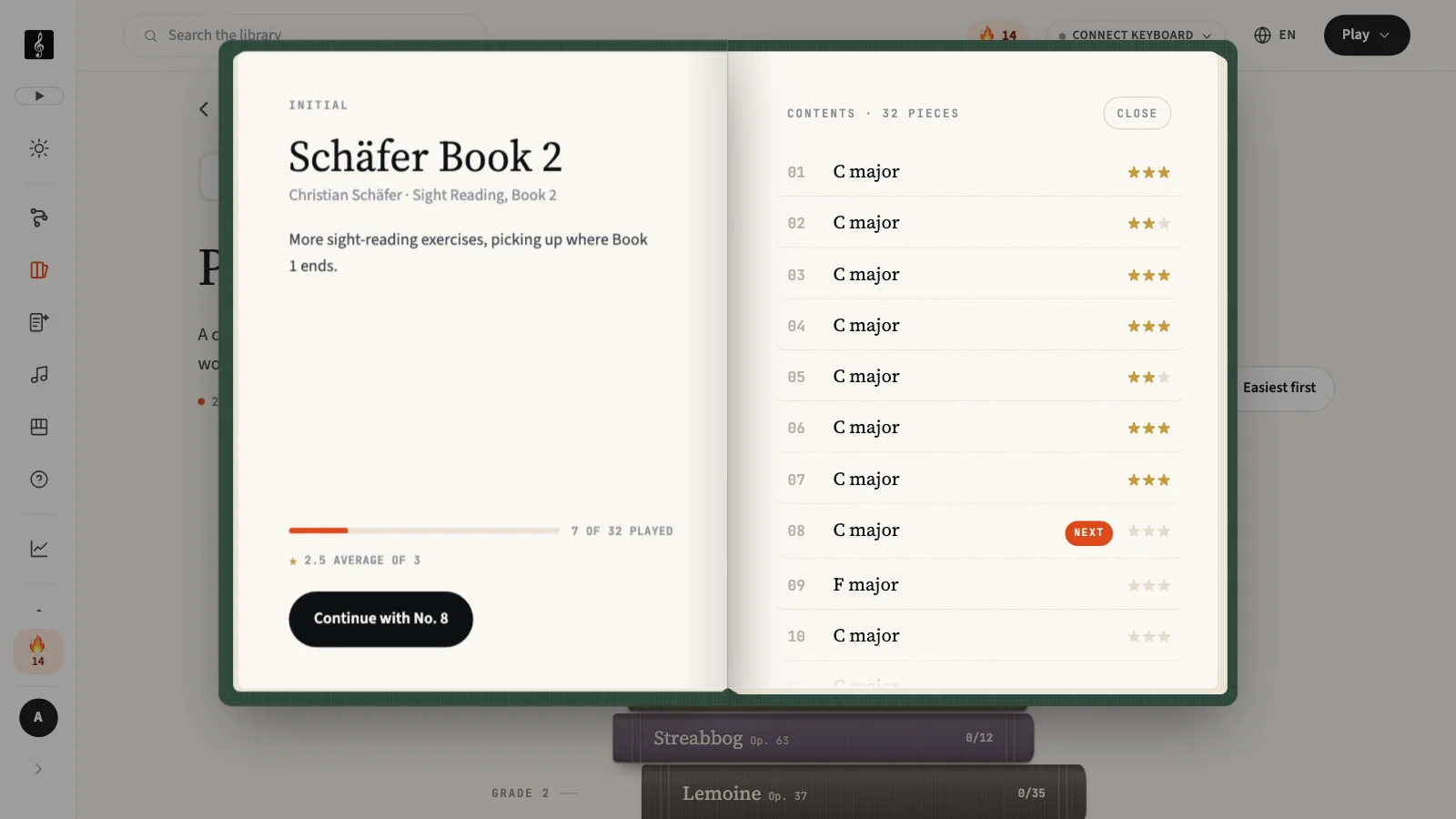
Open a book and you’ll see its contents, the stars you’ve earned on each study and which one comes next. Work through it in order, or dip in wherever you like.
This month we also added 287 teaching pieces, most of them at the easier grades. They include Köhler, Beyer, Duvernoy, Czerny, Berens and Gurlitt, plus two complete sets: Streabbog’s 12 Very Easy and Melodious Studies and all fifty of Lemoine’s Études enfantines.
A weekly theory quiz
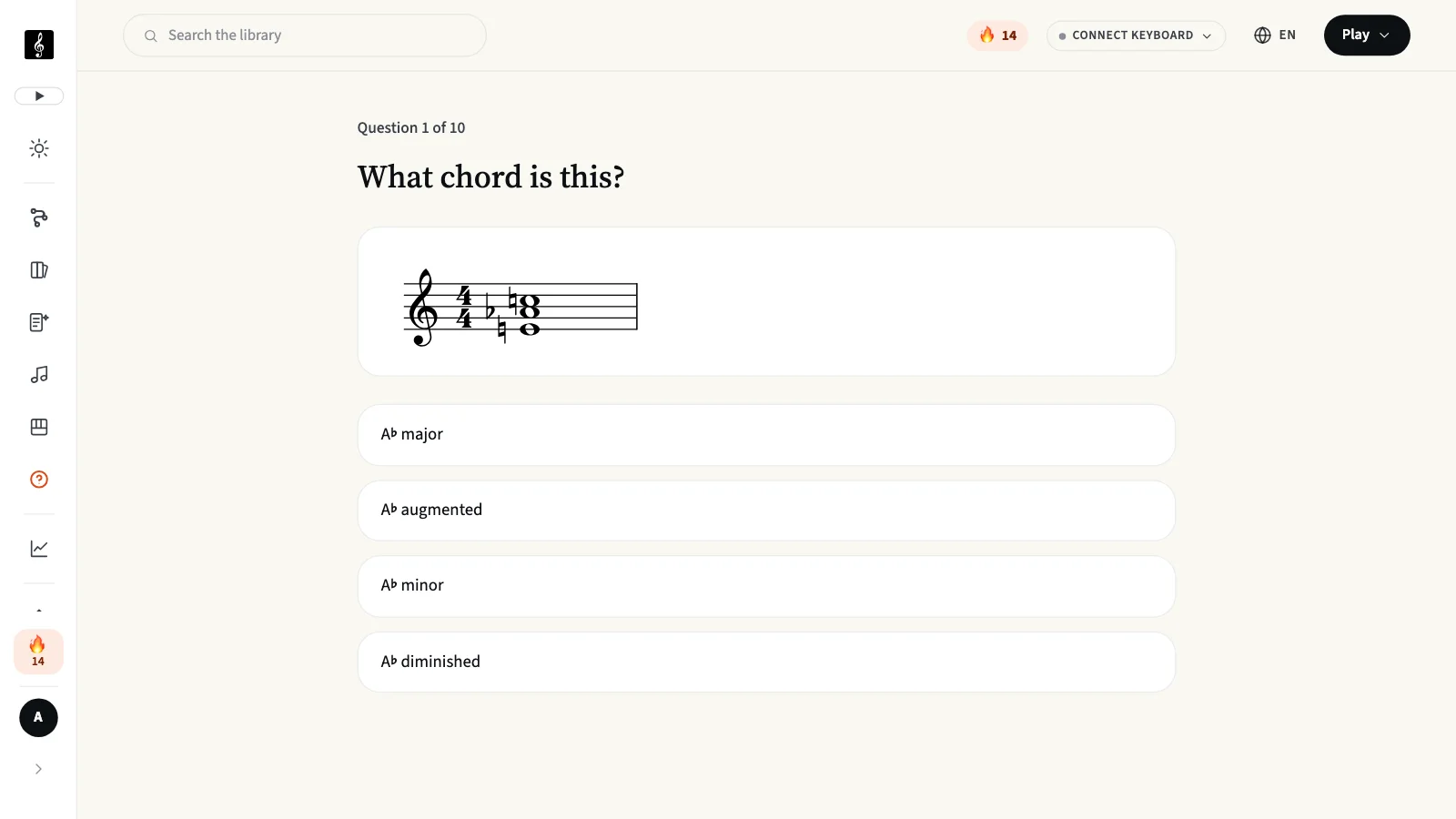
Our numbers show that some people open SightReader when they’re nowhere near a piano, maybe on the commute or out and about. You could always play simpler pieces on the on-screen keyboard, but we wanted to offer something more.
That led to the weekly theory quiz: ten questions on intervals, key signatures, notation and the piano itself, with real music to read on screen. It takes about three minutes, a new quiz arrives every Sunday, and your results appear on your Progress page. Give it a try and let me know how you get on!
Wait for the right note
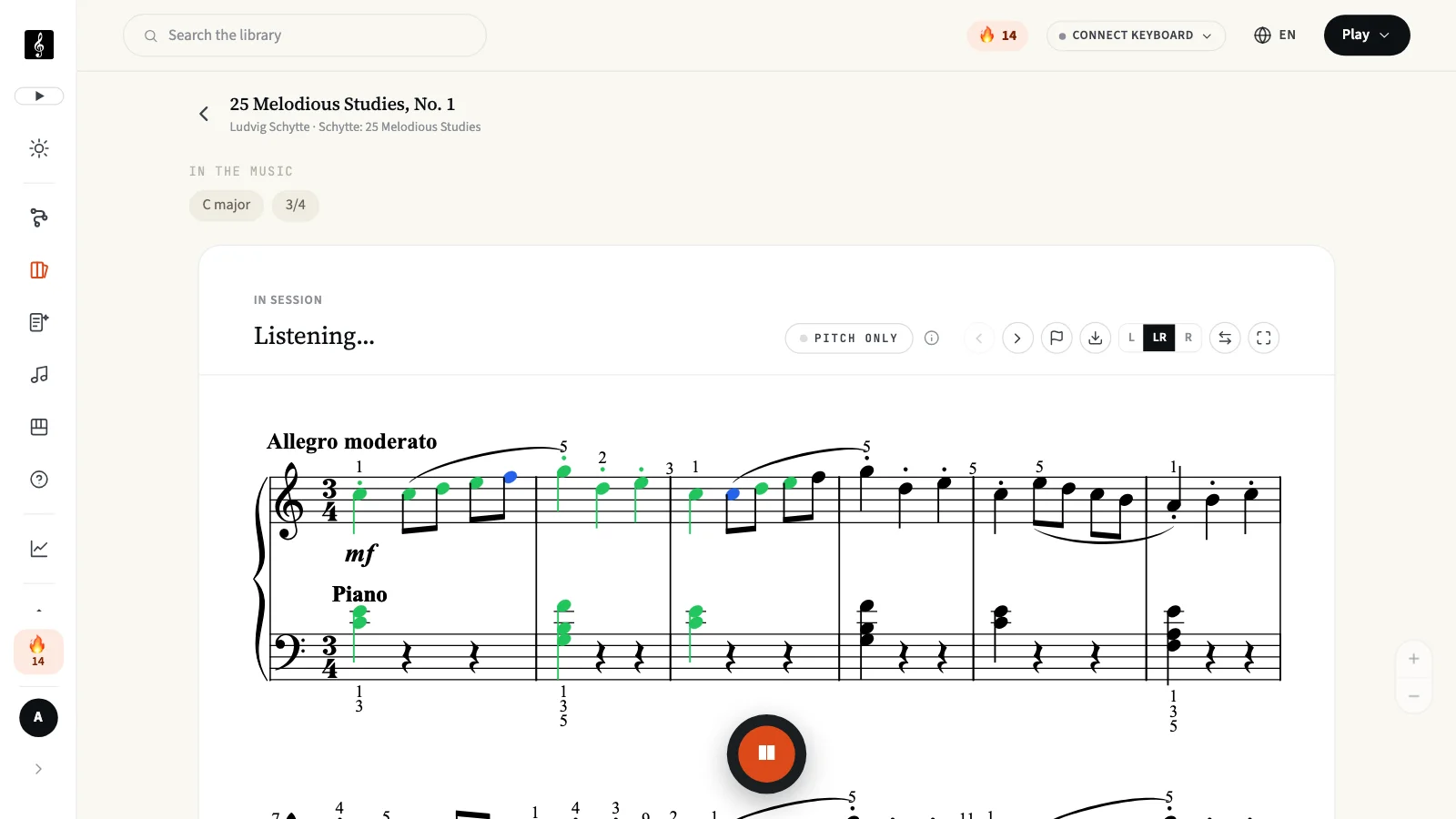
Last of the big changes is a new setting that’s especially good for beginners. In Pitch Only mode, you can now ask SightReader to wait for the right note. When you play a wrong note, the music stays put until you find the right one, and that note turns blue. Your stars still depend on what you got right first time, but you get to correct a mistake in the moment and see where you went wrong.
Anyone can switch it on, from the cog in the player or in Preferences. That said, I think readers at intermediate level and above will probably get more from leaving it off. In an exam, or when you’re accompanying someone on music you’ve never seen, you have to keep going through your mistakes, so it’s worth practising that way.
Everything else
Those are the biggest changes, but there have been plenty of smaller improvements and fixes too. Bluetooth pianos now work on Windows as well as Mac, and connecting one takes fewer steps. Your keyboard stays connected when you move to the next piece. The score scrolls less and shows more of your music, and Listen mode can now play just the hand you’re practising. The full list is on the changelog.
As always, I love hearing from people who use SightReader. If you have anything to share, good or bad, please email me at [email protected]. Thanks for reading, and happy practising!
— Bret