

Il grado 7 è il livello in cui una prova di lettura a prima vista smette di essere due righe su due pentagrammi e comincia a essere tre righe su due pentagrammi. La mano destra porta spesso la melodia sopra e una voce interna sotto, mentre la mano sinistra tiene il basso. Il tuo occhio deve seguire tre cose indipendenti alla volta, le tue mani devono dividere quattro dita tra due voci, e devi comunque tenere la pulsazione. La musica non aspetta.
È anche il livello in cui il vocabolario ritmico e armonico raggiunge il repertorio vero. Puoi incontrare rubato e a piacere, metri irregolari come il 5/8 e il 5/4, un repertorio completo di abbellimenti e modulazioni che attraversano due tonalità senza rapporto fra loro nell’arco di una pagina di musica. Il brano da leggere è circa una pagina, il che significa che c’è abbastanza spazio perché le idee si sviluppino e perché tu ti perda se smetti di prestare attenzione. Leggere a questo livello assomiglia più al pensare in contrappunto che al compitare le note.
Questa guida copre cosa si aspettano le principali commissioni d’esame al grado 7, come prepararsi alla prova e quali brani di SightReader si collocano al livello giusto per esercitarsi.
Cosa si aspettano gli esaminatori al grado 7
Al grado 7 le commissioni hanno smesso di pubblicare parametri stretti e hanno cominciato a fidarsi del candidato per la lettura di una scrittura matura. Il brano è circa una pagina, in qualsiasi tonalità maggiore o minore fino a quattro diesis o quattro bemolli, in uno qualsiasi dei metri semplici, composti o irregolari che il programma ha introdotto. La novità è la trama: una mano suona spesso due parti indipendenti, così l’occhio legge tre voci su due pentagrammi. Il vocabolario ritmico copre tutto il bagaglio dei gradi precedenti più suddivisioni più dense, e le indicazioni comprendono ora l’intera gamma dinamica ed espressiva, gli abbellimenti, le indicazioni di pedale e i modificatori di tempo come rubato e a piacere. Le commissioni si differenziano soprattutto per quanto dura la finestra di preparazione, per quanta flessibilità c’è nella descrizione della trama e per il fatto che la prova sia obbligatoria o no.
| Commissione | Lunghezza | Tonalità | Posizione delle mani | Alterazioni | Preparazione | Obbligatoria al grado 7? |
|---|---|---|---|---|---|---|
| ABRSM (Regno Unito) | ~14-18 battute (circa una pagina) | Tutte le tonalità maggiori e minori fino a 4 diesis o 4 bemolli | Libera; trame a più voci | Tavolozza cromatica completa | 30 secondi | Sì |
| Trinity (Regno Unito) | Circa una pagina | Maggiori e minori fino a 4 diesis o 4 bemolli | Libera; più voci | Tavolozza cromatica completa | 30 secondi | No, una di quattro prove di supporto a scelta |
| LCM (Regno Unito) | Circa una pagina | Maggiori e minori fino a 4 diesis o 4 bemolli | Libera; più voci | Tavolozza cromatica completa | 60 secondi | Sì |
| RCM (Canada e USA) | Circa una pagina | Maggiori e minori fino a 4 diesis o 4 bemolli | Libera | Tavolozza cromatica completa | Sguardo breve | Sì (il RCM Level 8 è l’equivalente approssimativo) |
| MTAC Certificate of Merit (USA) | Circa una pagina | Maggiori e minori fino a 4 diesis o 4 bemolli | Libera | Tavolozza cromatica completa | Sguardo breve | Sì |
| AMEB (Australia) | Circa una pagina | Maggiori e minori fino a 4 diesis o 4 bemolli | Libera | Tavolozza cromatica completa | Sguardo breve | Sì in Comprehensive; a scelta con l’orale in Piano for Leisure |
Vale la pena conoscere un paio di differenze. Trinity continua a lasciarti evitare del tutto la lettura a prima vista al grado 7 scegliendo un’altra prova di supporto, che è un’opzione reale per i candidati i cui punti di forza stanno altrove, anche se a questo livello la maggior parte degli insegnanti ti spingerà comunque a sostenerla. LCM concede un minuto intero di preparazione, che al grado 7 è molto utile: trenta secondi bastano appena per leggere tre voci, e il tempo in più cambia il modo in cui affronti la scansione. ABRSM resta la più esplicita sui propri parametri. Le altre pubblicano al livello di «sostanzialmente simile al grado 7 ABRSM» e lasciano il resto all’esaminatore.
Il grado 7 è l’ultimo grado prima che si maggiore, re♭ maggiore e i loro minori relativi compaiano nel programma. Tutto ciò che sta oltre i quattro diesis o i quattro bemolli aspetta il grado 8. È una piccola tregua sulla pagina, ma una tregua reale nella sala di preparazione.
Come allenare la lettura a prima vista al grado 7
Lo studio che forma un lettore a prima vista di grado 7 ha un aspetto diverso dallo studio con cui si impara un brano. A questo punto il tuo vocabolario di lettura è abbastanza ampio perché la prova non riguardi più il decifrare le note. Riguarda il destreggiarsi tra le voci, il pianificare la forma e il tenere viva la pulsazione attraverso una musica che vuole rallentarti. Se hai letto la nostra guida principale su come migliorare la lettura a prima vista, una parte di questo ti suonerà familiare. I punti specifici del grado sono qui sotto.
Segna gli ingressi delle voci prima di suonare. Quando la mano destra porta soprano e contralto, scorri le battute nella finestra di preparazione e annota in testa dove ogni voce entra ed esce. Al grado 7 la voce interna spesso entra ed esce: a volte è la nota più bassa di un accordo di due note nella mano destra, a volte attraversa nel pentagramma della mano sinistra, a volte il contralto è per un attimo il basso. Se non hai notato quegli ingressi prima del primo movimento, suonerai pulito il soprano e il basso e la voce interna sparirà, che è l’errore più comune del grado 7.
Pianifica il rubato, non improvvisarlo. Quando vedi rubato o a piacere, gli esaminatori non ti chiedono una lettura da metronomo. Ti chiedono un senso della forma musicale: un leggero allungamento verso il culmine di una frase, un po’ di tempo di recupero all’uscita. La soluzione è guardare la frase come un’unità, decidere nella finestra di preparazione dove vive il punto di massima tensione e prevedere di concederti due o tre movimenti in più di respiro intorno a esso. Tratta il rubato come una flessione controllata della pulsazione, non come una licenza per suonare senza.
Tieni la linea del basso sotto pressione. Sotto le trame a più voci, il basso della mano sinistra è la prima cosa a sfuggire, perché la tua attenzione viene tirata verso l’alto dalla voce interna. La linea del basso è la base armonica del brano, e se sparisce l’esaminatore sente l’armonia crollare. Esercitati leggendo brani nuovi con il basso un po’ più forte di quanto faresti in esecuzione, solo per l’allenamento.
Tieni l’occhio una battuta intera avanti. Sotto il grado 7 a volte te la cavi leggendo la battuta corrente. A questo livello la musica crolla se lo fai. Le mani hanno bisogno delle loro istruzioni in anticipo, perché ora hanno più da fare che in qualsiasi livello precedente: un accordo, un ingresso di voce interna, un cambio di pedale, un cambio dinamico, tutto dentro la stessa battuta. Allena l’occhio a leggere la battuta N+1 mentre le mani suonano la battuta N. È un’abilità più che un trucco, e costruirla richiede settimane di studio lento e deliberato. È la differenza più grande tra un lettore a prima vista di grado 7 e uno di grado 8.
Scansiona la mappa delle modulazioni prima di suonare. I brani di grado 7 spesso modulano due volte in un breve passaggio. Nella finestra di preparazione, cerca le alterazioni che ricorrono: una nota diesizzata che compare due volte in due battute consecutive di solito annuncia una nuova tonalità, non un colore di passaggio. Una volta individuate le modulazioni, puoi sentire l’armonia muoversi nella tua testa prima che le tue mani la incontrino, il che evita il piccolo scontro alla stanghetta che svela la modulazione all’esaminatore.
Preparati all’esame con le lezioni di grado 7 di SightReader
Le Lezioni di SightReader ti accompagnano nel grado 7 una breve lezione alla volta, progettate attorno agli stessi vincoli che usano gli esaminatori. Riportano avanti l’insieme cumulativo di tonalità dei gradi precedenti e si concentrano sulle trame e sulle indicazioni che sono nuove al grado 7: la scrittura a tre voci su due pentagrammi, le indicazioni di rubato, i metri irregolari e il vocabolario completo degli abbellimenti. Ogni lezione insegna una cosa, poi ti dà brevi brani costruiti per essere letti una volta, valutati e lasciati andare. Quando vuoi ripassare, la pratica per l’esame di grado 7 ha brani graduati esattamente a questo livello. La lettura a prima vista del grado 7 ABRSM copre cumulativamente ogni tonalità fino a quattro diesis o quattro bemolli, quindi una volta sicuro il grado 7 vale la pena tornare ai brani più difficili di grado 5 e grado 6, in particolare fa♯ minore e do minore, per tenere fresche quelle tonalità.
I gradi dal 6 all’8 sono solo Pro dall’inizio alla fine in SightReader. Il piano gratuito copre i gradi di base. All’estremità alta della scala abbiamo investito molto nella progettazione delle lezioni e nella libreria di brani sottostante, e la facciamo pagare. Se sostieni il grado 7 nei prossimi mesi e non hai ancora un abbonamento, il conto è semplice: un abbonamento Pro costa decisamente meno di una singola ora con un insegnante, e con esso puoi leggere un’ora al giorno senza pensare al costo.
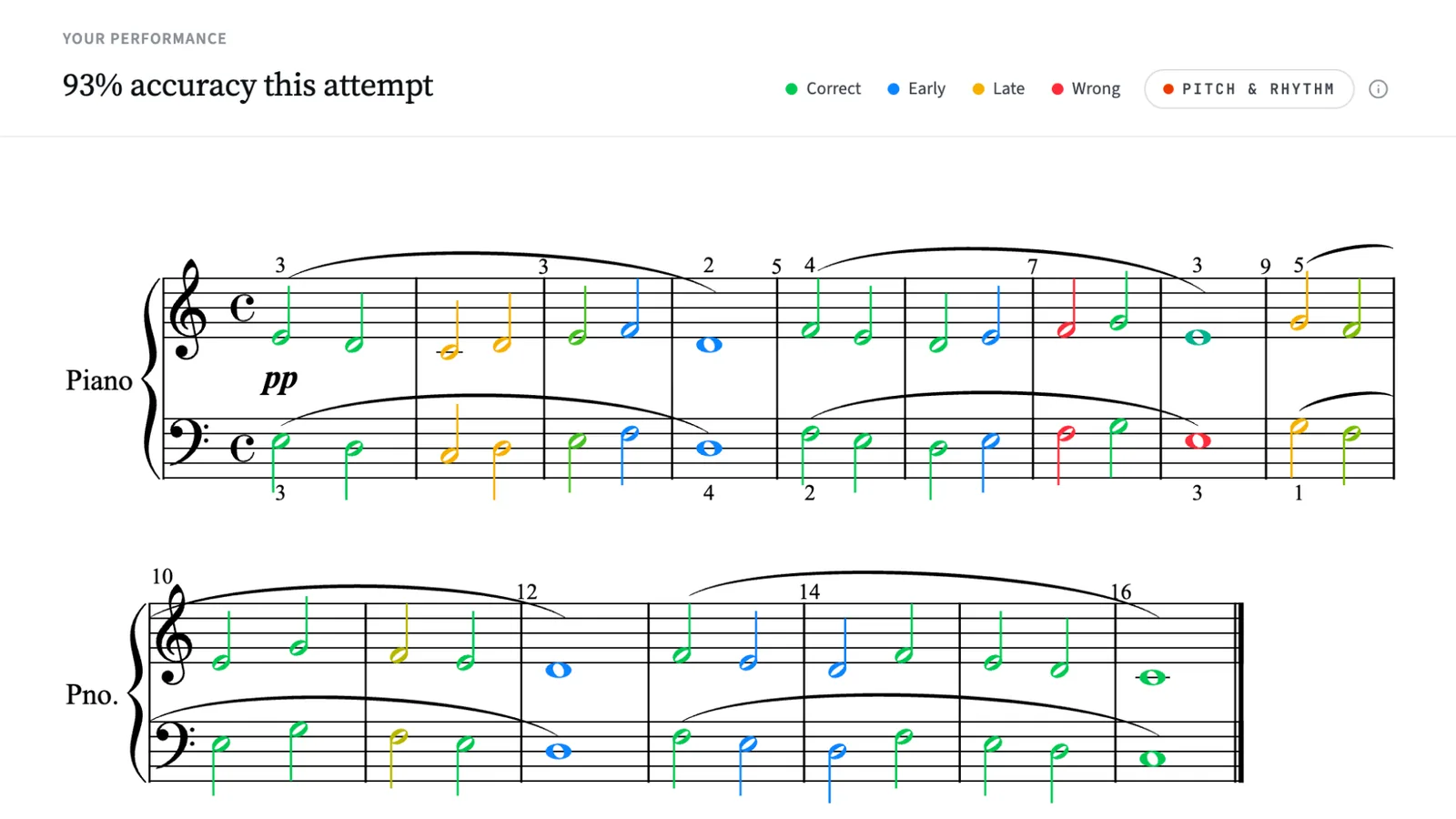
Il traguardo di preparazione all’esame più concreto che possiamo consigliare è questo: leggi brani di grado 7 con una precisione del 90% o più prima di sostenere l’esame. Quello è lo standard che un esaminatore di grado 7 definirebbe sicuro, e il feedback guidato dal cursore in SightReader rende facile vedere quale voce stai perdendo e in quale battuta.
Un secondo traguardo, per chi punta alla distinzione: completa una serie intera di brani di pratica di grado 7 senza scendere sotto il 75% su nessuno di essi. La distinzione al grado 7 si vince e si perde sui brani a più voci, dove il 75% è un’asticella bassa che intrappola i candidati la cui lettura della voce interna è discontinua.
Brani della libreria di SightReader da leggere a questo livello
Le lezioni e la pratica per l’esame di grado 7 qui sopra sono materiale di lettura a prima vista costruito su misura. La libreria di SightReader è l’altra faccia della piattaforma: migliaia di brani veri di compositori veri, etichettati per difficoltà. I brani di difficoltà 5 si collocano al livello di lettura a prima vista del grado 7.
Non fingeremo il contrario: a questo livello non c’è una spina dorsale gratuita. La difficoltà 5 nella libreria di SightReader è riservata ai Pro, allo stesso modo delle lezioni e della pratica per l’esame a questo grado. Tra i compositori che leggerai qui ci sono Chopin (i notturni e le mazurche più facili), Mendelssohn (le Romanze senza parole più accessibili), Schumann (la maggior parte delle Kinderszenen), Bach (le invenzioni a due voci e le sinfonie a tre voci più facili), John Field (notturni) e i più dolci intermezzi di Brahms. Sono i brani che hanno insegnato a generazioni di pianisti a leggere la scrittura a più voci, e sono i brani che gli esaminatori avevano in mente quando hanno scritto il programma.
Tratta ciascuno come una singola lettura a prima vista. Suonalo una volta dall’inizio alla fine al tempo più lento che tenga insieme la trama, e passa oltre. Il repertorio è abbastanza ampio perché tu non resti senza materiale nuovo.
Errori comuni al grado 7
Tre errori spiegano la maggior parte dei punti persi a questo livello.
Il primo è perdere la voce interna. Il candidato suona pulite la linea del soprano e la linea del basso, il ritmo è intatto, la pulsazione è stabile, e il contralto sparisce del tutto. Gli esaminatori se ne accorgono. La soluzione è nella finestra di preparazione: scorri il pentagramma della mano destra in cerca di gambi che puntano verso il basso dentro un accordo, e cerchiali in testa come ingressi del contralto. Una volta segnalati, puoi sentirli prima di suonarli.
Il secondo è esagerare con il rubato. I candidati vedono rubato stampato in cima al brano e lo trattano come un semaforo verde per suonare senza pulsazione, che è esattamente il contrario di ciò che chiede l’indicazione. Il rubato è la flessione controllata di una pulsazione che è ancora lì. La cura è pianificare due o tre momenti precisi di allungamento nella finestra di preparazione e suonare il resto a tempo. Se hai deciso in anticipo dove vive il respiro, non ne inonderai l’intero brano.
Il terzo è fermarsi al primo abbellimento complesso. Al grado 7 dovresti già avere un approccio funzionante agli abbellimenti, ma a questo livello a volte incontrerai un simbolo che non riesci a decifrare in tre secondi. La regola è la stessa dei gradi precedenti, ma ora conta davvero: se non riesci a leggere un abbellimento, saltalo e tieni la pulsazione. L’abbellimento vale frazioni di punto. La fermata ne vale parecchi.
Allena la lettura a prima vista di grado 7 in SightReader
Le lezioni di grado 7 di SightReader sono pensate per i candidati che si preparano alla prova di lettura a prima vista del grado 7, e la pratica per l’esame di grado 7 ti dà brani graduati per ripassare. Coprono l’insieme cumulativo di tonalità fino a quattro diesis o quattro bemolli, il vocabolario ritmico completo compresi i metri irregolari, la scrittura a più voci su due pentagrammi e le indicazioni espressive che compaiono a questo livello. I gradi dal 6 all’8 sono solo Pro. Se quest’anno stai lavorando verso il grado 7, un abbonamento si ripaga nella prima settimana di studio.
Prima di questo, e poi
- Prima di questo: Come allenare la lettura a prima vista al piano al grado 6, per il grado in cui arrivano per la prima volta le indicazioni di pedale, gli abbellimenti e i metri irregolari.
- Poi: Come allenare la lettura a prima vista al piano al grado 8, per il grado finale in cui compaiono si maggiore, re♭ maggiore e i loro minori relativi.
FAQ
Quanto dovrei allenare la lettura a prima vista al grado 7?
Da quindici a venti minuti al giorno, ogni giorno. La lettura a prima vista a questo livello è pesante mentalmente: ti destreggi tra tre voci e una pulsazione, e la tua attenzione si consuma più in fretta che ai gradi più bassi. Due sessioni brevi al giorno funzionano meglio di una lunga. Tutto ciò che va oltre i venticinque minuti in un’unica seduta è sprecato: l’occhio smette di pianificare in avanti e comincia a decifrare la battuta corrente, che è proprio l’abitudine che stai cercando di rompere.
Qual è l’equivalente del grado 7 nelle altre commissioni d’esame?
Il grado 7 corrisponde da vicino tra ABRSM, Trinity, LCM e AMEB Grade 7 nel Regno Unito e in Australia. Gli equivalenti più vicini in Nord America sono il RCM Level 8 (il Certificate Program del Royal Conservatory, usato ampiamente in Canada e negli USA) e il MTAC Certificate of Merit Level 7 in California. La scala del RCM è più lunga di quella di ABRSM (il Level 10 corrisponde all’incirca al grado 8 ABRSM), quindi il RCM Level 8 si allinea al grado 7 ABRSM in modo abbastanza pulito. Passa dall’uno all’altro e l’abilità del giorno dell’esame è la stessa.
Come leggo tre voci su due pentagrammi?
Segna gli ingressi delle voci prima di suonare. Nella finestra di preparazione, scorri il pentagramma della mano destra in cerca di gambi che puntano verso il basso dentro un accordo: quelli sono gli ingressi del contralto. Scorri il pentagramma della mano sinistra nei punti in cui la nota superiore si muove in modo indipendente da quella inferiore. È lì che il tenore cambia pentagramma. Una volta segnati gli ingressi, sentili nel contesto prima del primo movimento. Notare le voci in tempo è gran parte della difficoltà, e suonarle è più facile di quanto sembri.
Come gestisco le indicazioni di rubato a prima vista?
Pianifica due o tre momenti precisi di allungamento nella finestra di preparazione, e suona il resto a tempo. Cerca il culmine della frase e concediti un movimento in più di respiro intorno a esso. Cerca le cadenze e concediti una pausa frazionaria prima della risoluzione. Il resto del brano resta in pulsazione. Il rubato è una flessione controllata, non un’inondazione.
Quanto manca prima di essere pronto per il grado 8?
Finisci le lezioni di grado 7, poi leggi i brani della pratica per l’esame di grado 7. Se riesci a leggerli con una precisione del 90% o più, senza fermarti, sei al livello in cui il materiale di grado 8 comincia a essere utile. Il segnale di transizione più affidabile è la costanza sui brani a più voci: se riesci a leggere tre voci in modo pulito al 90% su tutte e quattro le tonalità al confine dell’insieme di grado 7, le due nuove tonalità del grado 8 saranno un salto più piccolo di quanto ti aspetti.
Fonti
- ABRSM Piano Practical Grades Syllabus 2023 & 2024, specifiche di lettura a prima vista. https://www.abrsm.org/sites/default/files/2023-09/piano-2023-2024-practical-grades-syllabus-may-2022.pdf
- Trinity College London, guida alle prove di supporto per pianoforte. https://www.trinitycollege.com/qualifications/music/piano
- LCM Examinations, Music Grades Specification. https://lcme.uwl.ac.uk/media/jeelt5f4/music-grades-specification.pdf